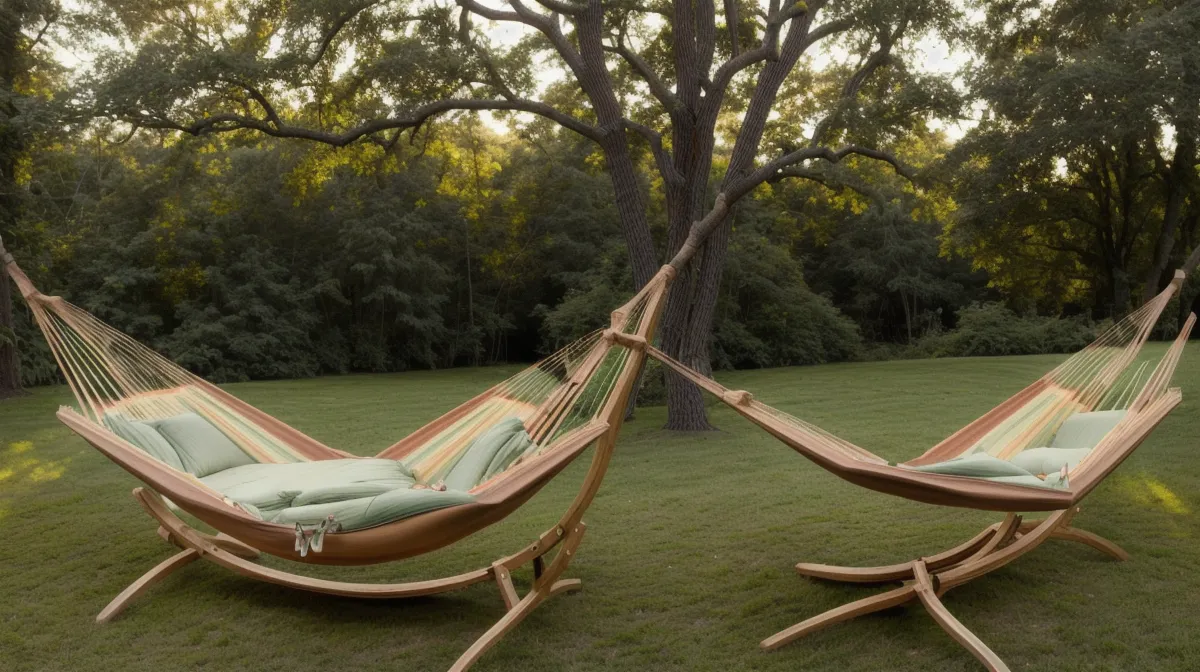
One hundred and fifty dollars. That's what the metal hammock stand cost before it folded under both of us and dropped us flat on our backs in the red clay of our backyard one humid evening around Memorial Day weekend. Terrifying ping, then sky, then a long silence while we waited to see who'd laugh first. Quick disclosure before we go further: this post contains affiliate links, and if you buy through one we earn a small commission at no extra cost to you. We only point people toward the DIY plans and tools we've actually used ourselves out here, usually after getting something wrong the first time.
People ask us the same handful of questions whenever they see the finished stand under the oaks, so here's what we actually tell them.
Why a Store-Bought Stand Never Had a Chance Here
Metal kits are built for flat, tidy outdoor patios in the suburbs, and our half-acre outside town is anything but flat — it's sloped, it's clay, and it shifts every time it rains. A narrow-footprint kit needs level ground to stay upright; ours doesn't have any to offer. Building our own meant widening the base and using pressure-treated wood rated for ground contact, because in the humid Southeast anything that isn't rated for ground contact turns into mulch by the following summer. We'd already learned that lesson building our way out of a half-acre money pit, so we weren't going to gamble more lumber on something that wouldn't survive a season.
He wanted it heavy enough that a few degrees of slope simply wouldn't register — "hurricane heavy," as he kept calling it, half-joking at first. That's the real appeal of building instead of buying: a factory kit has no idea what your yard actually looks like. Yours does.
Real Woodworking Plans vs. Just Winging It
How much does a bad YouTube tutorial actually cost you? A full sheet of plywood, in our case — we tried piecing together our own cut list from free videos before buying real plans, and ended up with cuts that didn't line up with anything on the frame. That's usually the second question people ask: whether paying for actual plans is worth it. Yes, without much hesitation.
We spent one sweltering afternoon scrolling through options instead. My Shed Plans came up first, since we're still chipping away at the workshop out back, but that library leans almost entirely toward sheds and outbuildings — not much use for a single piece of backyard furniture. We ended up pulling the design from TedsWoodworking instead, which had enough range to cover something this specific. A pressure-treated 4x4, for what it's worth, doesn't actually measure four inches by four inches — it's closer to three and a half — and having a plan with an exact cut list meant we found that out on paper instead of mid-project with a tape measure and a bad word. It's the difference between working from a recipe and just guessing at proportions as you go.
Wood, Fasteners, and the Neighbor Who Over-Buys Screws
Pressure-treated lumber costs more than standard framing lumber, and people ask if it's really necessary for something as small as a hammock stand. It is, if you want it to outlast a couple of seasons — untreated wood sitting low and damp just doesn't hold up out here. Same logic applies to the hardware: we used corrosion-resistant lag bolts instead of whatever was cheapest at the register, because rust bleeding down outdoor lumber is its own special kind of ugly. Ruben, a few lots down, showed up mid-build with a box of galvanized bolts he swore he'd over-ordered for his own project — he does this constantly, buys double what any job needs and hands off the surplus to whoever's working nearby. We didn't argue.
Having an actual cut list also saved three separate trips back to the hardware store, which matters more than it sounds like when the nearest one is a real drive from a half-acre homestead outside town — we'd already learned that lesson building a simple garden bench earlier this year. Post spacing came up too, more than once. A hammock stand only works if the two uprights sit far enough apart to hold the right amount of sag without the whole frame twisting; get that spacing wrong and it racks sideways under weight instead of just holding it steady.
The Backward Cut and the Quiet After the Saw Stops
Every build has a failure in it somewhere, and ours was cutting the 45-degree support brace backwards on the first try, mid-afternoon, in enough humidity that sawdust stuck to our arms instead of falling off. There's a particular kind of quiet right after a circular saw shuts off, ears still ringing faintly, dust hanging in the air for a beat before it settles, and that's exactly the moment we both looked at the ruined brace, then at each other. Neither of us said much. We went inside, got something cold, and came back out twenty minutes later to cut it again, correctly this time.
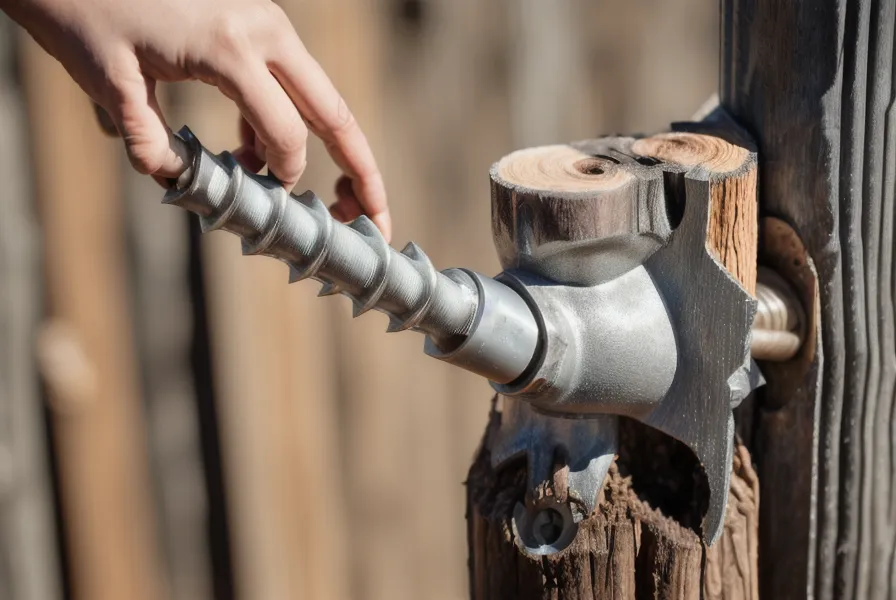
That same brace is where diagonal bracing earns its keep — without it, a tall, narrow frame like a hammock stand can rack side to side under a swinging load instead of standing rigid. Pilot holes matter just as much: skip one and a half-inch lag bolts will split a 4x4 before they're even halfway in. We'd already learned that lesson the hard way installing string light poles for our seating area, so at least this time we didn't have to relearn it from scratch.
Getting Eight-Foot Timbers Home Without a Truck
People also want to know how you haul 8-foot pressure-treated timbers home without a truck bed built for it. Honestly, we asked Dale. He's lived next door for over two decades and keeps a flatbed trailer parked behind his place for exactly this kind of favor — he'll lend it out, but only in trade for one favor back, no fixed terms, just an understanding that it evens out eventually. We hitched it up, hauled everything home in one trip instead of three, and he still brings up "owing him one" every couple of months, usually when something heavy needs moving on his side of the fence.
Is This Stand Right for Every Backyard?
Not necessarily. If you're renting an apartment with a small balcony and posted weight limits, do NOT build this one — a pressure-treated wood stand like ours weighs far more than any factory kit, and most balconies were never engineered for that much dead weight plus two adults. Those lightweight metal kits we complained about earlier are genuinely the right call in that situation, because low weight and portability are the actual point there. Freestanding and heavy only makes sense once there's real ground underneath it — soil, not a slab twelve floors up.
So Was It Worth Building?
Five years of backyard projects out here has taught us that overbuilt beats flimsy almost every time, and this stand just confirmed it again. We stained it to match the deck, hauled it out under the oaks with a fair amount of grunting, and tested it with our sixty-pound dog added to the load for good measure. No creak, no give, no ping. It reminded us of the first night our chickens walked into their coop entirely on their own, nobody chasing them in — that same specific, quiet confirmation that something you built is actually doing what it's supposed to.
After a long day out hiking at Jordan Lake State Recreation Area, neither of us wants a folding chair — we want to lie flat and not think about anything. If your current stand keeps threatening to dump you in the dirt, a real set of plans and a pile of pressure-treated 4x4s will fix that for good. We still reach for TedsWoodworking before starting anything new out here, mostly because starting from an actual plan beats guessing every single time. Your hamstrings might hate you for a day of leveling and squatting to check the base — but the stand isn't going anywhere.