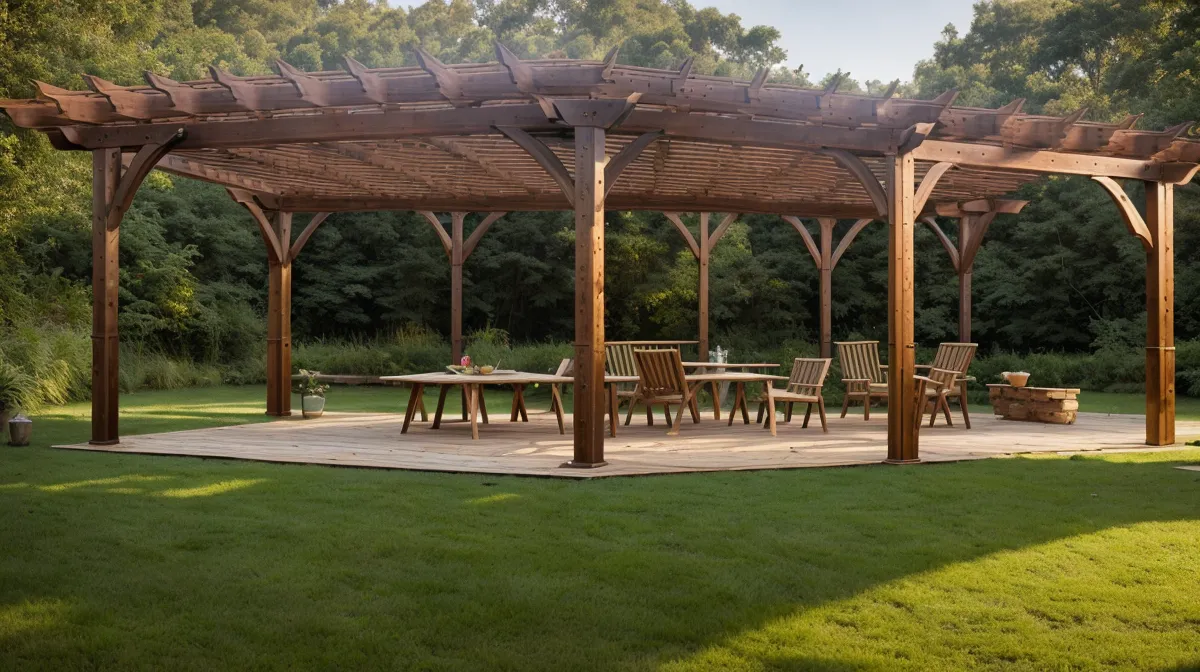
Planning pergola lighting when the closest streetlight is a mile off and half the rural living advice online assumes you've already got power run to the yard isn't straightforward. We didn't have an answer either — not until the structure itself was finished and we were sitting on the floorboards after dark, completely blind. Our half-acre sits out past Chatham Mills, on the edge of Pittsboro, and once the sun drops the woods get loud: crickets, tree frogs, a dog somewhere losing its mind at nothing. None of that noise helps you find the stairs down. We'd spent months getting the frame right, and nobody warned us that lighting this backyard renovation — or really any DIY outdoor project with actual wiring involved — would turn into its own separate argument, with opinions about color temperature, wiring, and whether we'd regret cutting a corner six months later.
Quick disclosure before we get into it — this post contains affiliate links, and if you click through and buy something, we earn a small commission at no extra cost to you. We only point you toward stuff we've actually paid for and used out on our own half-acre, because we've wasted enough money already learning what NOT to buy.
Plans vs. Winging It: How We Actually Got Here
To explain the lighting, you kind of have to explain the whole pergola first. Before we ever looked at a real plan, we'd tried piecing cuts together off a stack of YouTube tutorials with no blueprint behind them — no set of numbers we could double-check against each other — and burned through a full sheet of plywood on angles that didn't match anything else on the frame. That's when the contractor quote came in at nearly three times what we'd budgeted. I remember standing in the driveway thinking: forget it, just hand us a real set of plans and we'll figure out the rest ourselves. Short version: we got serious. We ended up with a library from TedsWoodworking, mostly because their 16,000-plus designs included pergolas built for oddly sloped yards like ours, not just flat suburban lots.
She handled the material list this time, checked against real numbers instead of guesses, and that discipline is the whole reason we don't wing structural stuff anymore — skip actual plans for your own instincts and it costs more plywood than it saves. Every rafter got checked for level and square before we drilled a single hole for the lights, because we've been humbled by crooked cuts enough times elsewhere not to take chances on parts nobody sees once the fixtures are up. Post footings were about the only structural piece we didn't stress over on this build, mostly because that particular headache belongs to a different project we'd already survived. A pergola is really just a roofless frame for hanging shade, plants, or in our case, lights — you can't slap fixtures on after the fact and expect them to look intentional, so you end up treating the rafters themselves as your electrical conduit from the very start.
Half the workshop lumber for this build came off the salvage pile out back, and the rest we hauled home on our neighbor Dale's flatbed trailer, which he'll lend out anytime as long as you owe him exactly one favor in return — no more, no less, which is a rule you learn fast not to argue with once he's your neighbor. Stud walls for that workshop are still just OSB on two sides and a blue tarp stretched over the open end, so "workshop" is doing some generous lifting in that sentence. None of that mattered much for the pergola lighting itself, except that it's where the router and the transformer both live when they're not in use.
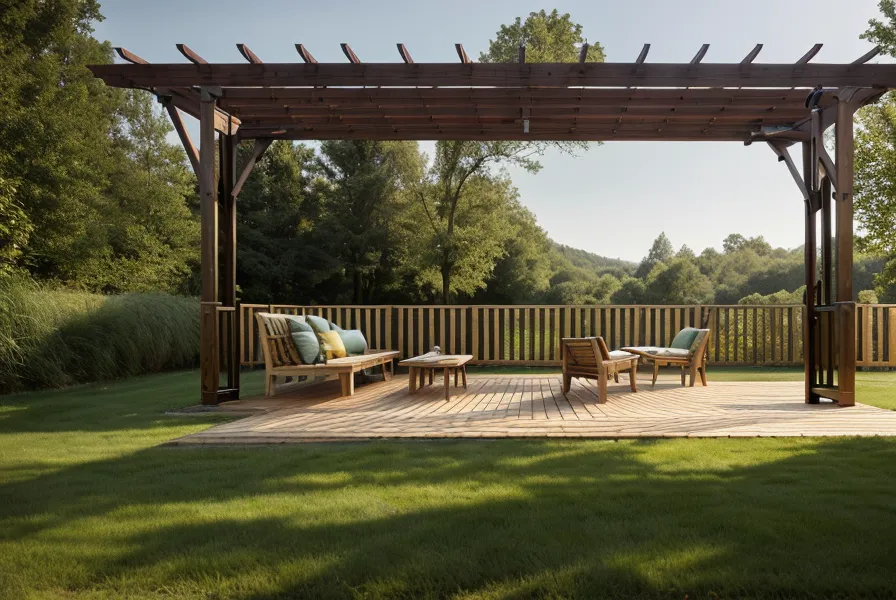
Solar Or Low-Voltage — Which One Actually Works in the Woods?
Being out in the country, we really wanted to go the sustainable route first. We looked hard at the Self Sufficient Backyard guide for ideas on off-grid power, since it covers way more than just lighting — coops, gardens, water collection, the whole backyard-as-a-small-farm approach. But here's what we learned the hard way: solar string lights under real tree cover are a recipe for disappointment. Unless your pergola sits in a clearing with a full day of direct sun, those little battery packs are dead by nine o'clock. Right when you actually want to be out there.
So we went with a 12-volt low-voltage system instead, and the tradeoff is worth being honest about. Low-voltage wiring means a lot more upfront effort — trenching, mounting a transformer, stapling wire along every rafter — for a system that costs less to maintain and just works, rain or shine, for years afterward. It's the same math as buying a slow cooker outright instead of paying for takeout every week for a month: more cost and more hassle on the front end, way less of both later on. We didn't want to be replacing brittle solar plastic every spring. We wanted something permanent, something that still worked on the cloudy weeks that make up half of a North Carolina winter.
A low-voltage run this shallow — about six inches down — never came close to tripping the permit thresholds that had us calling the county on a bigger project, which was one fewer phone call to make. If you're already elbow-deep in a project, like when we were figuring out how to build deck stairs after finishing our backyard platform, a few extra hours of wiring is nothing next to the frustration of lights that just don't turn on when people are over.
Picking a Pergola Lighting Glow That Won't Ruin the Dark Sky
Living out here means we actually like being able to see the stars, so a backyard that looked like a used car lot was never the goal. We settled on a warm 3000K color temperature — anything higher, like 4000K or 5000K, starts reading blue-white and pulls in every mosquito between us and the Virginia line. Warmer light under that threshold just doesn't attract bugs the same way.
We also paid attention to what's sometimes called dark-sky-friendly lighting, which just means pointing your light down instead of out. Rather than wrapping the posts in fairy lights that scatter glow in every direction, we mounted small shielded LED pucks on the underside of the rafters, aimed straight down at the seating area. It keeps the light off the neighbors' windows and off the sky, which mattered to us for the same reason we looked into best solar path lights for a dark rural North Carolina backyard — you want to light the path, not the atmosphere above it.
Running Wire Without Wrecking the Wood
By the time we got to actually running wire, half the lessons had already been paid for elsewhere. I spent an evening in the workshop flipping through My Shed Plans to see how they handled exterior utility lighting on their designs, and even though those 12,000-plus plans are mostly sheds, the weatherproofing details translate directly to a pergola. The transformer ended up mounted on the back of the house with a slight downward tilt, the same logic that matters even more on an actual shed roof so rain sheds off instead of pooling on top — just less critical when the box itself is small.
The wire itself ran through a shallow trench to the pergola base, and here's a detail that'll save you a callback: if your structure's pressure-treated, your staples need to be stainless steel or hot-dipped galvanized — FULL STOP. The chemicals in treated lumber will eat through a cheap staple in a single season. We learned that on a chicken coop project, which is also where we got serious about predator-proof hardware, because anything less than fully corrosion-resistant hinges and latches isn't just ugly, it's an invitation. If your own pergola happens to be built from untreated wood, you can skip the stainless upgrade — it's specific to the treated stuff.
Ruben, from three lots down, showed up with a box of stainless staples the same week we needed them. The man chronically over-buys fasteners for every project he starts and just hands off the surplus rather than return anything, which has saved us more than one trip to buy the right size at the last minute. Small-town luck, honestly.
She routed a shallow groove into the top of each rafter to hide the wire, which took an extra afternoon but means you can't see a single black cable once it's done — the pergola just looks like it glows on its own. One thing worth knowing if you try this yourself: the board's actual size is always a little smaller than what's printed on the tag at the lumber yard, so don't cut that channel too close to the edge or you'll blow through the side. She learned that lesson the annoying way when a groove she'd routed one evening didn't sit flush the next morning — the board had swollen just enough overnight from the humidity that the channel had shifted. Wood out here never really stops moving, treated or not, so now we leave a hair of extra room in anything we cut for wire.
That router, by the way, is one of maybe five tools that make our actual essentials list — if you're trying to figure out what's worth owning outright for outdoor projects versus what you can rent for a weekend and give back.
So, Which Way Should You Go?
If your pergola sits in real shade for most of the day, skip solar and run a low-voltage system — it costs more time and more effort up front, but it works every night, dimmed or full, rain or dry spell. Save solar for a pergola that sits in an honest clearing with sun on it most of the day; anywhere shadier and you're just replacing dead batteries every season. The same logic applies to plans versus improvising: if you're building something structural — a pergola, a deck, anything with real load on it — get an actual set of plans instead of stitching together tutorials, whether that's TedsWoodworking for the broader structure library or something more specialized depending on what you're building. Check our best backyard builds roundup if you want a wider comparison before you commit to a design.
Building your own version of this is mostly a series of small, stubborn decisions, not one big dramatic one. We're not going to pretend every choice here was obvious in the moment — plenty of it was arguing in the driveway and re-measuring things we thought we'd already measured. But sitting out there now with the 3000K glow catching the wood grain and the dimmer turned low enough to hear the frogs again, it's hard to imagine having paid someone else to make all those calls for us.