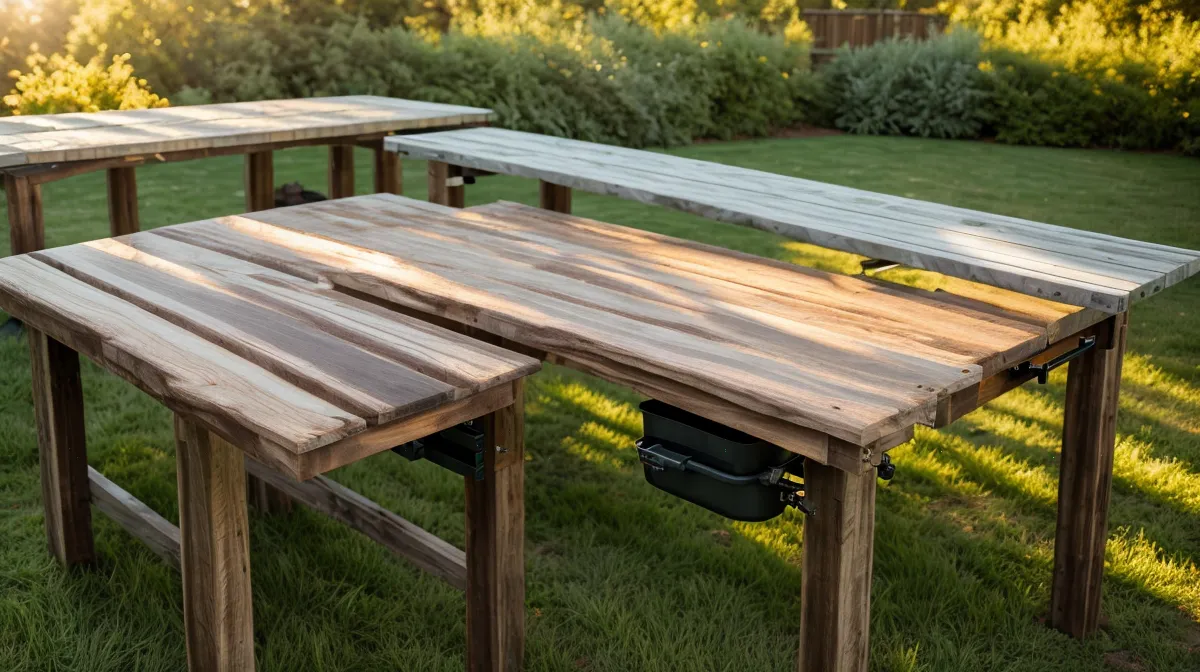
The drill bit catches on a knot in the green pine, and the judder runs up both arms before it finally breaks through. Right as she leans over my shoulder, she asks if the leg brace is supposed to flex like that. It isn't. That's the whole reason we stopped free-handing backyard builds and started working strictly off professional wood plans.
Quick disclosure before we get into it: this post has a few affiliate links in it, and if you click through and buy something, we earn a small commission at no extra cost to you. We only point people toward plans and tools we've actually put to use on our own projects — this workbench included.
She's the one who plans; I'm the one who finds out the hard way why the plan mattered. So when people ask us about building a heavy duty workbench for a DIY workshop instead of just guessing at leg thickness, here's what we actually tell them.
Do You Really Need Professional Wood Plans to Build a Workbench?
Short answer: not strictly, but you'll wish you had them by the second weekend. A shop bench has to carry the weight of a loaded miter saw, hold still while you're leaning your whole body into a cut, and survive years of stuff getting dropped on it — that's a different job than eyeballing a set of shelves. Picking a real workbench blueprint instead of guessing at joint spacing is a little like following a recipe instead of improvising the proportions: someone already tested the math on load-bearing legs and stretcher spacing, and that math is the whole appeal.
The Post-Hole Disaster That Made Us Trust a Cut List
Here's a moment where things went sideways, because every one of these posts needs one. Long before the bench, we tried to sink twelve post holes with a manual clamshell digger, one at a time, in the clay near Chatham Mills that fights you for every inch of depth. By dark we'd finished exactly four, and neither of us could lift a coffee mug the next morning without wincing. We rented a power auger the following morning and had the rest done before lunch. NOT our proudest twenty-four hours, but it's the reason we don't trust our own judgment anymore on anything load-bearing — footings included — without a plan that spells out spacing and hardware ahead of time instead of figuring it out hole by hole.
Two Woodworking Plan Libraries, One Workbench
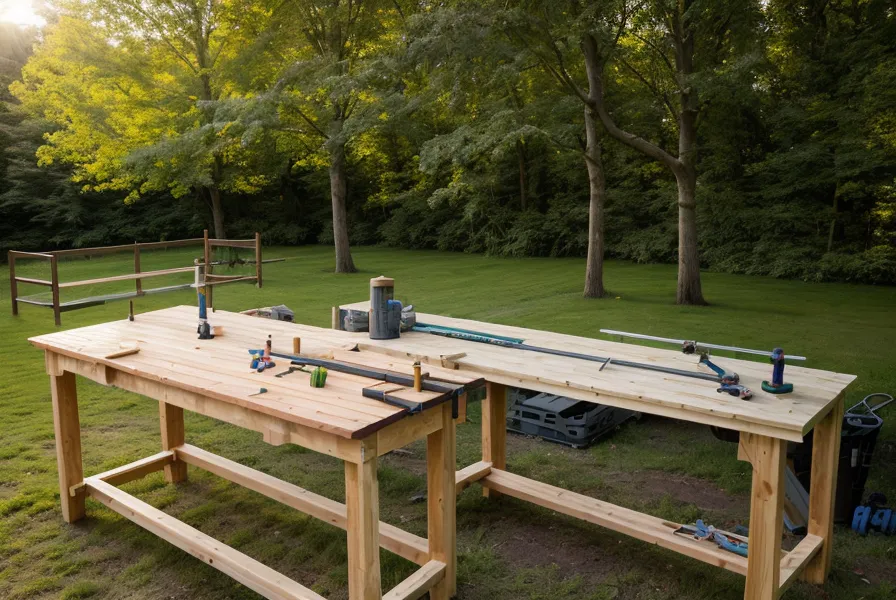
We ended up cross-referencing two different libraries before settling on a final cut list. TedsWoodworking had the deepest set of options for shop furniture specifically, enough plans that narrowing the shortlist took a couple of late nights on its own. We also checked My Shed Plans, which leans harder toward full outbuildings and storage structures, so it wasn't the right fit for this particular bench, though it's stayed useful for other builds. A cut list also saves you from the classic letdown where the lumber measures smaller than the label promises, which still catches people off guard no matter how many builds they've done, and it means you're not standing in the aisle guessing at which three or four tools you'll actually reach for instead of hauling out the whole rack.
A guy from our county DIY Facebook group, Jonas, texted us partway through the build asking which plan set we'd used — and it turned out he'd already bought hardwood boards for his own bench before asking a single question about the plan itself, which is backwards in a way we recognized immediately because we've done the exact same thing on other projects. The same framing logic we leaned on stacking studs for our shed shows up again in a good bench plan; legs and stretchers aren't so different from a short wall once you're staring at the cut list, and neither project forgives skipping a step just because you're in a hurry.
Should a Workbench Be Built From Hardwood or Construction Lumber?
We get this question constantly, usually from people who've been scrolling gorgeous oak workbench builds online. Skip it, at least for a shop piece that has to survive a Piedmont summer. Dense hardwoods don't give the way a working bench sometimes needs to, and in a space where humidity swings hard between seasons, that stiffness can turn into cracking instead of just settling. We built the frame from structural pine with pressure-treated legs, the same treated-versus-untreated call we've made more than once on our backyard build list — treated wherever it's close to a slab or exposed to moisture, plain construction lumber everywhere above that line. Pine also moves a little as the seasons change, which sounds like a flaw until you realize a bench that flexes slightly is more forgiving over the years than one that refuses to move at all, right up until it cracks.
Do You Need a Permit for a Workbench in Your Garage?
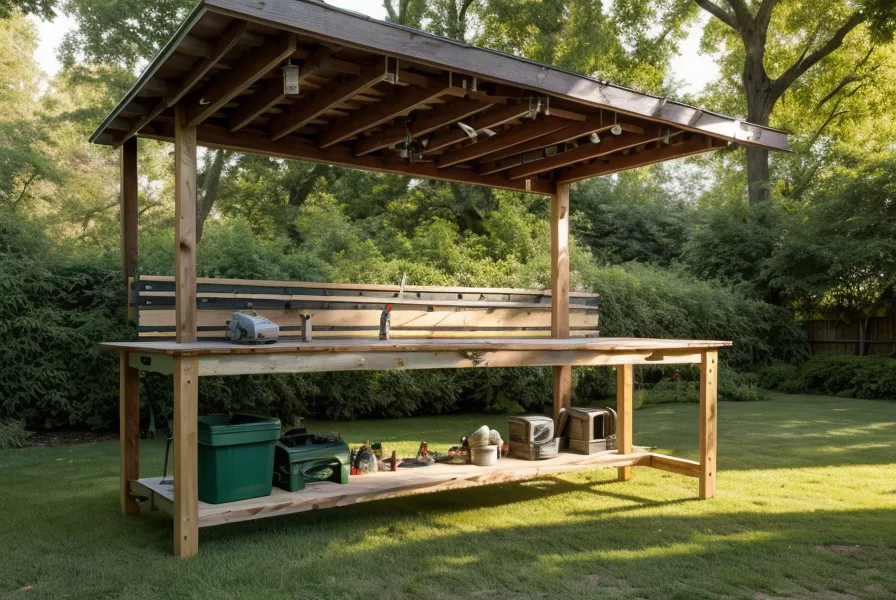
No, and this is usually the point where people relax a little. Permit questions come up constantly around here, but they're a deck-and-footings conversation or a full-outbuilding conversation, not a garage-furniture conversation — a bench bolted together inside a structure you already own doesn't trip any of the thresholds that get a county involved. It's a nice break from something like a lean-to shed build, where roof pitch alone decides whether water sheds properly off the back edge; a workbench doesn't have to shed anything, it just has to sit still. We did finish the whole frame without a single emergency run for extra lumber, which might be a first for us — usually the guys at the counter know us by sight because we're back two or three times in the same week.
Checking a Bench for Square and Level Without Fancy Gear
Shane, over at the county lumber yard, keeps fourteen antique levels lined up on a shelf above his own bench, which says a lot about how seriously some people take this step. You don't need fourteen — one good level, a tape measure, and the discipline to check both directions on every leg before a single lag bolt goes in gets you there, because a bench that's out of square announces itself the moment you set a straightedge across the top. For anything bigger than a single bench, a full outbuilding say, My Shed Plans earns its keep on the foundation and permit side in a way a furniture-focused plan set doesn't bother covering. It's also a much lighter hardware list than the run we bolted onto the coop to keep everything out that wanted in; a bench just needs lag bolts that won't back out under vibration, nothing built to stop a predator.
A Bench That Finally Earns Its Keep
There's a specific afternoon we keep coming back to. The pergola shadow had already crawled clean across the patio, further than it usually reaches by that point in the day, and we were still out back running a level across the bench top for the third time just to be sure it hadn't shifted. It held. It's a far cry from tools scattered on the ground and a bench that rocked every time the miter saw kicked on. We've already started planning a DIY dust collection system to go with it, because apparently finishing one project just means we've found the next one. If you're tired of a work surface that moves more than the thing you're trying to cut, go find a real set of plans — we keep coming back to TedsWoodworking ourselves, and it's the first place we'd point anyone starting their own backyard workshop build.