Water either beads up on a board or it vanishes straight into it, and those are two completely different stories about what that piece of wood needs next. We didn't understand that distinction for longer than we'd like to admit, and it cost us some soggy lumber before it sank in. Five years into turning this half-acre lot in the NC Piedmont into a working homestead, we've treated enough sheds, coops, decks, and fence sections to know backyard wood treatment isn't a single decision you make once — it's outdoor maintenance you keep circling back to, the same way you'd rotate tires, except a lot more people seem to get it backwards with wood.
One early project taught us the value of a plan more than any article ever could. We once brought in extra hands to power through staining three structures in a single weekend, NO scope written down beyond "help us get this stuff coated" — and by Saturday afternoon he wanted to finish the fence sections first while we wanted the coop trim done, so the whole thing stalled out until we sent him home and finished it ourselves. That's roughly how most of our backyard DIY mistakes go: not enough plan, too much assuming everyone's picture matches.
The two biggest misconceptions in this whole conversation are simple ones. People assume "pressure-treated" means a board is ready for sealant the day it leaves the store, and they assume "just let it weather naturally" means a maintenance-free decision. Neither is true, and figuring out why kept us standing in the hardware aisle longer than we'd like to admit, holding cans of stain like we were trying to read a contract. Why would pressure-treated lumber need anything else done to it? That's exactly the kind of question that gets a ramp built on a sponge.
Pressure-Treated Doesn't Mean Ready for a Finish
Start with the first myth, because it's the one that almost cost us a workshop ramp. Pressure-treated lumber gets infused with wood preservation chemicals at the mill, and that made us assume the boards were basically bulletproof the moment we got them home. She stopped me before I could run a sealer over the ramp boards, pointing out that they still felt heavy, almost damp, for lumber that had supposedly been sitting on a rack for weeks.
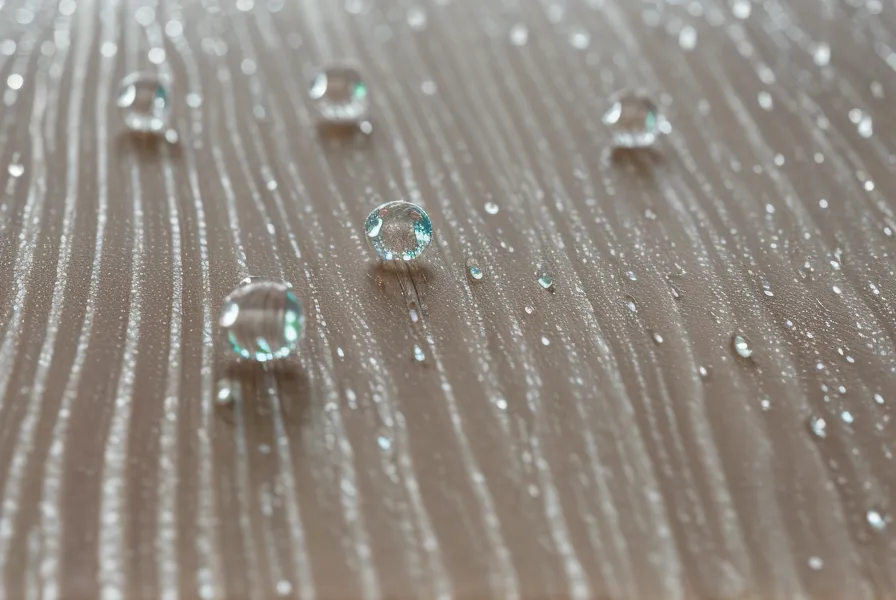
Here's what actually happens if you seal that lumber too early: the finish traps whatever moisture is still inside it, and instead of protecting the surface, you've sealed in a sponge. That trapped moisture doesn't evaporate — it works on the wood from the inside, and you won't see the damage until something splits or sags years down the line. So we ran the simplest test we know: splash some water on the board and watch. If it soaks in instead of beading up, the wood isn't ready for anything except more time outside. We waited on that ramp far longer than we wanted to before any sealer touched it.
Weathering Wood Naturally Still Requires a Choice
Short answer: no, and that surprised us too. Cedar and other rot-resistant species can absolutely be left bare and allowed to go silvery-grey, which looks great against a house, but "leaving it alone" is still a choice with consequences attached. The wood will grey, it will check — develop those small surface cracks — and it will gradually soften if nothing ever intervenes. Doing nothing is still doing something; you're just choosing which problem shows up later.
We got talked into testing this on the coop trim after a weekend at Jordan Lake, watching the boat docks there go that same soft grey without a lick of finish on them and figuring our cedar could pull off the same trick. Wanda, a reader who first wrote in after our coop post asking whether an A-frame design holds up through ice storms, sends us an unprompted photo of her own coop every spring without us ever asking for one — and last year's photo showed her trim gone the exact same silver-grey as ours, healthy and intact, no rot in sight.
The chickens didn't seem to mind the experiment either. The first night after we left that trim bare, every single bird walked itself through the coop door without me herding one of them in, like the wood wasn't giving them any trouble anymore and they could somehow tell. Small thing, but it stuck with us.
The Peeling Nightmare Nobody Warns You About
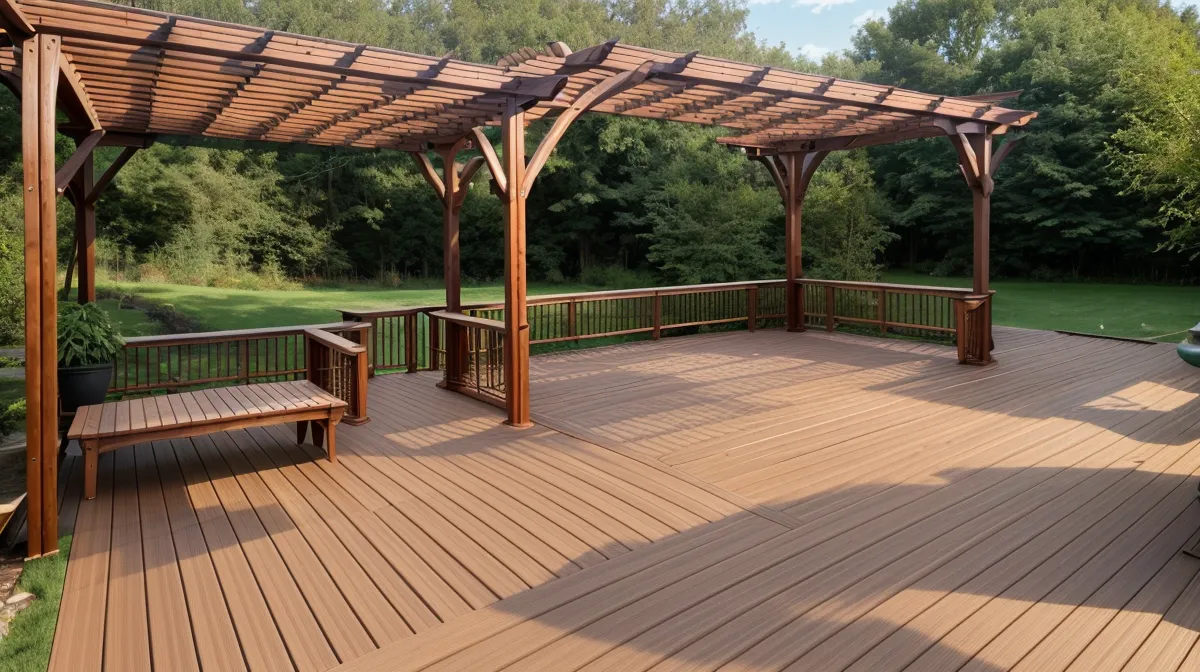
Paint feels like the safe, tough choice, and for something like the coop — where we wanted one solid color and didn't care about seeing wood grain — it mostly is. Put that same paint, or a solid stain that behaves like thin paint, on horizontal deck boards in a humid climate, and you've set up a different problem. Paint and solid stain sit on top of the wood as a film. Moisture gets underneath that film eventually, the sun heats it into vapor, and the vapor has nowhere to go but out — popping the finish off in those ugly chip-like flakes you've probably seen on somebody's deck.
For our deck we went with a semi-transparent, penetrating stain instead, which soaks into the wood fibers rather than sitting on top of them. Patrice, from the neighborhood Facebook group, happened to be over trading a flat of seedlings for an afternoon of staining help right around when we made that call, and she pointed out the obvious upside before we'd even finished the first board: a penetrating finish just fades as it wears out instead of peeling. Fading we can live with. Sanding an entire deck back to bare wood because of a peeling nightmare is not something we're signing up for twice.
If you're earlier in a build than we were when we learned this, it might sound familiar to our experience constructing our first backyard shed from scratch, where we first figured out that the foundation and the finish matter about equally for how long something actually lasts. You can frame the sturdiest structure on the lot, but skip the right finish and the Carolina weather will take it back faster than you paid off the lumber.

Timing a Finish Around North Carolina Weather
Heat ruins a stain job just as fast as rain does, which we learned trying to finish the stair treads during a stretch of brutal midsummer heat. Oil-based stains need a certain amount of warmth to bond properly, but push the temperature too high and the oils flash-dry on the surface before they ever soak in, leaving a sticky mess instead of a finish. Newer low-VOC formulas, better for the air in your lungs, are pickier about that window than the old-school stuff our grandparents used, so we've learned to watch the thermometer and the forecast instead of guessing.
Then there's the afternoon a surprise thunderstorm undid an entire morning's work. We'd checked the forecast, but a Carolina summer storm doesn't care what your phone says — one minute it's blue sky, the next it's a DOWNPOUR, and a fresh coat of sealer that hadn't had its hours to cure just turned milky and ran off the deck steps into the clay, while I stood under the eaves smelling that sweet, tacky stain scent clinging to my hands for days no matter how much I scrubbed, watching the morning wash away in real time.
Wood Treatment Is a Recurring Chore, Not a One-Time Job
These days everything on the lot gets something — a clear UV-inhibiting coat for the pieces we want looking close to new, a solid stain for anything that needs to match the house, bare wood only where we've actually decided that's the right call instead of just skipping the decision. Twice a year, spring and fall, we run the same water-bead test we used on that ramp: splash some on the wood and watch. Beading means the finish is still doing its job. Soaking in means it's time for another coat, and catching that early is a lot cheaper than replacing a rotted sill plate later — the same way an oil change beats waiting for an engine to seize.
We've gotten less precious about any of it looking perfect — there are lap marks in our staining if you look closely — as long as the wood is actually protected underneath. We even used leftover stain on a smaller build to test a product before committing it to the whole deck; building a DIY wood hammock stand ended up being a decent trial run for that. Treating wood right isn't a box you check once. It's closer to seasoning a cast-iron pan than frosting a cake: something you keep doing a little of, over and over, instead of one big project you finish and forget.
Standing back at the workshop ramp now, dry season behind us and the water beading up like it's on a waxed car, we're glad we waited on that moisture instead of rushing a sealer onto it. The next debate is already lined up — something about the fence sections — and we fully expect to get at least one more thing wrong before we get it right.