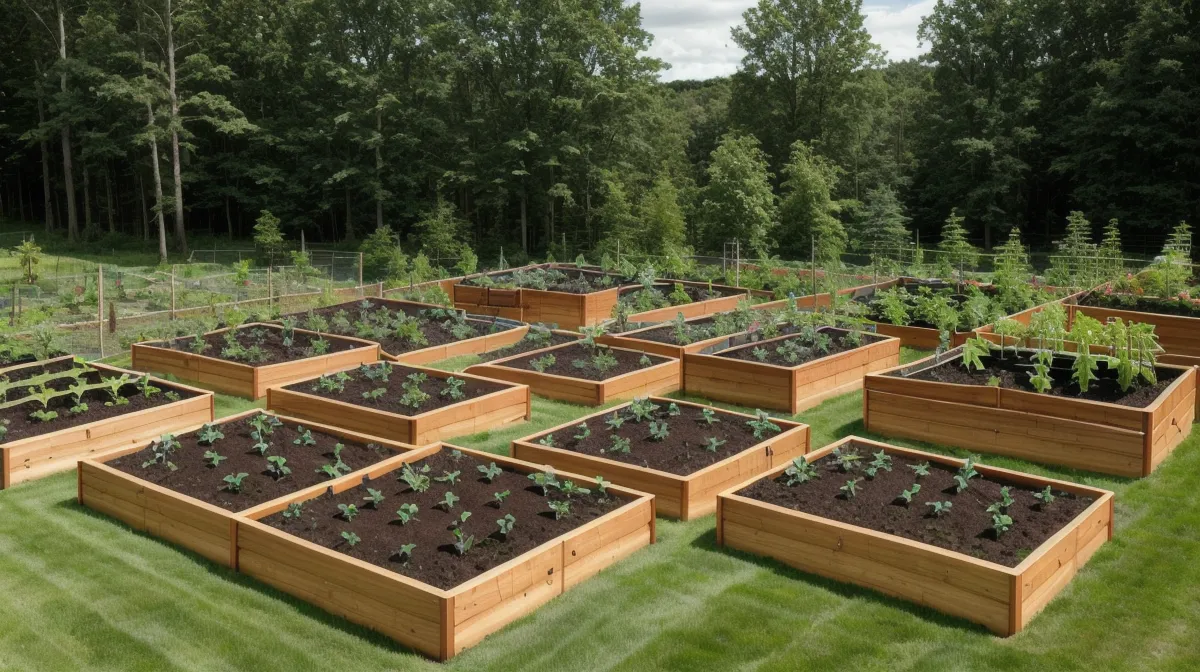
Our first raised garden bed lasted two seasons before the side wall gave out. The one sitting in our backyard right now is built to outlast the fence around it — maybe the whole homestead plan we've sketched out for this half-acre. Same red clay, same North Carolina humidity, completely different result. That gap between two seasons and however long cedar actually holds up is where the real lesson lives, and it has almost nothing to do with the wood species everyone tells you to buy.
Here's the myth we bought into completely the first time around: get real wood — cedar, redwood, anything but cheap pine — and a raised bed basically takes care of itself. Every backyard forum repeats some version of it. Our original bed wasn't even cedar, just untreated pine hauled home because it was cheap and fit in the back of the SUV, and it had turned into damp shredded wheat by the second September. So when we rebuilt, we assumed better wood alone would fix everything.
The Cedar Myth We Almost Fell For Again
It's not wrong that cedar resists rot better than pine. That part is true, and it's a big reason raised-bed gardening guides push you toward it. So why did we almost repeat the same mistake with a fancier wood? Because rot resistance buys you years, not decades, once the boards sit against wet soil every single day. Cedar delays the damp-shredded-wheat problem. It doesn't cancel it.
We almost made a second mistake trying to save money on the part nobody photographs: the corner posts. We grabbed the cheapest pressure-treated four-by-fours off the shelf at the big box store, figured treated is treated, and stood them up as the frame's skeleton. Within one season they'd twisted into shapes that had no business near a level surface — BANANAS, actual bananas, curved enough to knock a level bubble clean off center. Nobody warns you that pressure-treated lumber can still be wet from the mill, and it moves as it dries whether you want it to or not.
Kiln-dried stock replaced those posts, and we sized up while we were at it, from flimsy boards to solid 2x6 lumber for the walls. Worth knowing before you cut: a two-by-six is never actually two inches by six inches, so double check your math before you square up corner posts to length. The whole treated-versus-untreated debate is its own rabbit hole we won't fully chase here — what mattered for us was moisture, not the chemical label stapled to the board.

Lining the Box Instead of Trusting the Wood Alone
Cedar or not, we lined the interior anyway, and this is the part that actually solved our two-season problem. A heavy-duty, food-safe liner stapled to the inside walls — bottom left open so drainage and worms can still do their job — keeps wet soil from ever touching the boards directly. Take the wood mostly out of the moisture equation and you stop asking cedar to do a job it was never fully built for.
We'd already spent a good chunk of one weekend searching for safe raised bed lumber before landing on this fix, and the liner is the one piece of advice we'd pass along ahead of any specific board choice. It's a bit like buying a cheap umbrella versus a coat that actually repels rain — the coat still gets wet eventually, it just doesn't soak through to the shirt underneath. That's what the liner does for the wood.
We Still Rushed the Part We Knew Better On
Our garden site has a stubborn little slope, so we dug shallow trenches until the first course of boards sat level — skip that step and an unlevel frame will slowly rack itself apart, but getting square, level, and plumb right the whole way through is really its own topic for another day.
Patrice, a friend from the neighborhood Facebook homesteaders group, wandered over partway through with a flat of tomato seedlings she'd started from cuttings, and offered them in trade for twenty minutes of holding boards steady while we screwed the frame together. Fair trade. Half our tomato varieties this year didn't come from a seed packet at all.
That's also the afternoon a deck screw sheared off mid-pilot-hole with a sound like a tiny gunshot, because someone — no names — was rushing the drill to beat a rain cloud rolling in over the tree line. You can't back a snapped screw out. You move an inch over, pre-drill again, and try not to curse loud enough for the neighbors to hear.
So What Actually Makes a Raised Bed Last?
Our red clay doesn't drain so much as it collects, and after the first hard rain that spring, the beds turned into a shallow soup instead of soaking anything in. The deep explanation of why Piedmont clay behaves that way belongs to a whole different post, but functionally, it acts like a clogged drain no matter how much you wish otherwise.
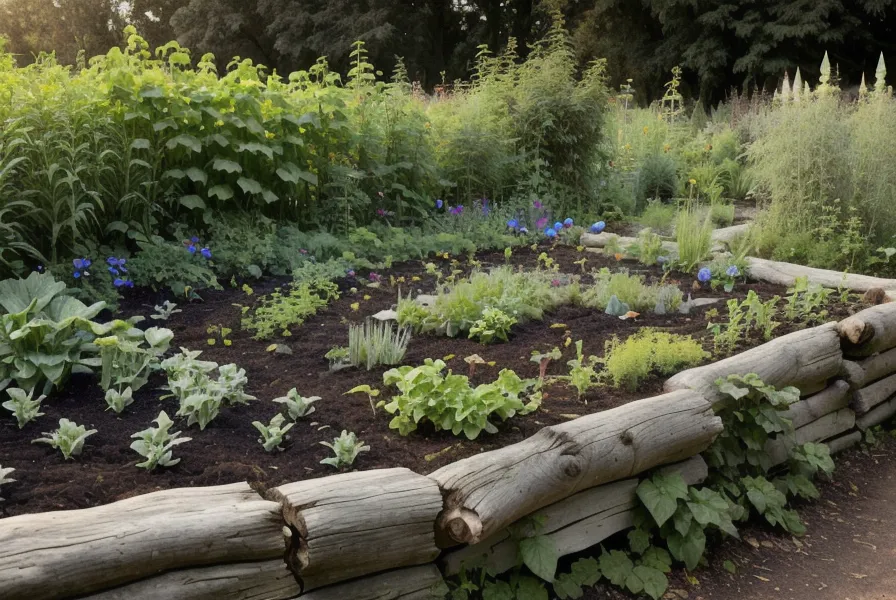
We fixed it by layering fallen branches and logs from the back of the lot at the bottom of each bed, a rough Hugelkultur base that soaks up extra water like a sponge and releases it slowly as the wood breaks down over the years. It's less a science project and more just giving the water somewhere to go besides sitting on our tomato roots.
Voles were the other surprise. We stapled hardware cloth across the bottom of every frame before the logs went in, which is its own rabbit hole better covered elsewhere, but skip it in rural North Carolina and you're basically building a heated buffet for rodents.
Building for the Decade, Not the Season
We already had proof that solid building pays off before we ever touched the garden beds. Rain hammered the roof of the storage shed we built our very first summer here, and when we ducked inside to wait it out, every tool on the pegboard was bone dry. Not a drop had gotten through. That's the whole argument for building things properly the first time, condensed into one soggy afternoon under a roof that actually did its job.
So here's the corrected version of the myth: wood species matters less than what touches that wood every single day. Buy the nicest cedar available, skip the liner, ignore drainage, and you'll get a slower version of the same rot we started with. Get the moisture management right — liner inside, hardware cloth underneath, real drainage below that — and cheaper lumber installed carefully will outlast expensive lumber installed carelessly. That's the whole trade, and it's the same math as picking the car with the worse badge and the better warranty: the sticker price was never the number that mattered.
Whether you're building a simple garden bench or a full run of raised beds, the fix is the same: stop optimizing for the fastest build and start optimizing for the one you won't rebuild in two years. Our workshop out back is still nowhere near finished, and a DIY bat house is next on the list for mosquito control, because apparently we don't know how to stop starting projects. The garden bed, at least, is done — properly, boringly, expensively done — and that's exactly how we wanted it.