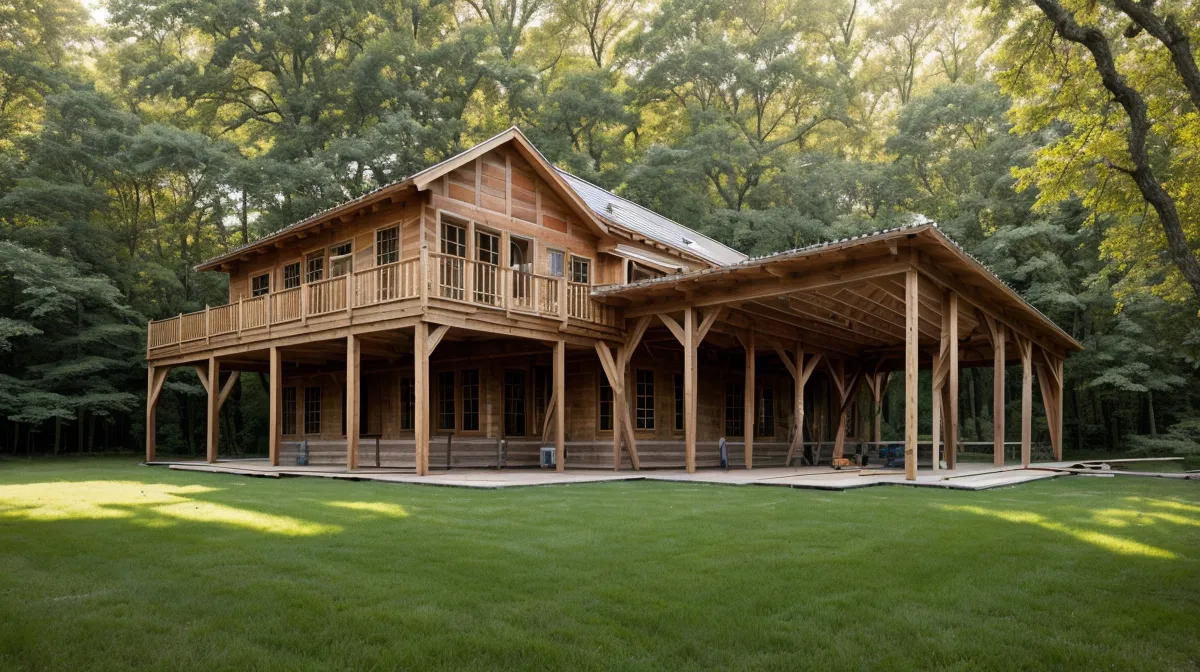
Deciding which backyard projects are worth building yourself and which ones you should just pay someone to handle is a question that comes up when you're standing in your own backyard with a tape measure in one hand and a contractor's business card in the other. We get asked that more than almost anything else about backyard construction, and there's no tidy rule that covers every situation. DIY versus hiring a pro isn't a single decision — it's a stack of smaller ones, project by project. After five years of building nearly everything on our half-acre ourselves, working from real outdoor building plans instead of guessing, we've landed on some pretty firm opinions about where that line sits. Here's how we actually answer it now, one project at a time, instead of guessing our way through it.
Quick heads-up before we get into it: some of the links below are affiliate links, which means we earn a small commission if you buy through them, at no extra cost to you. We only point people toward plans and tools that held up for us across multiple builds, not stuff we tried once and forgot about. The full disclosure policy is on our site if you want the details.
Which Backyard Projects Actually Need a Permit?
Permits are where a lot of backyard confidence goes to die. In most North Carolina counties, once an accessory structure crosses a certain size threshold in any single dimension, you're not just building a shed anymore — you've triggered an inspection process, and pretending otherwise gets expensive fast. We learned this planning our workshop, when the framing know-how that had carried us through smaller builds suddenly had nothing to say about footing depth or slab specs, because those get decided project by project, not out of a book. Our next-door neighbor Dale — a retired county roads supervisor with strong, usually correct opinions — has a habit of wandering over the fence line the second he hears a circular saw start up, and he's the one who first asked whether we'd checked our septic repair area before staking out corners. You can't just put a structure wherever the ground looks flat. If it sits over your repair field, the county will eventually make you move it, permit or no permit. That's the moment foundation work stopped being a weekend project and became a phone call.
Outdoor Building Plans Beat Guesswork Every Time
Our very first build was a simple storage shed, and "simple" turned into three weekends instead of one. We had a hammer, a circular saw, and way too much confidence in our ability to eyeball things. What we didn't have was an actual plan, and it showed — we were basically measuring once and cutting twice, discovering partway through that a 2x4 isn't really two inches by four inches, and that small gap compounds fast once you're framing anything bigger than a birdhouse. Getting a wall actually square, level, and plumb isn't intuitive if nobody ever showed you how to check it, and enthusiasm alone doesn't substitute for that. So she spent the next week researching how other people actually plan a build instead of winging it, and that's how we found TedsWoodworking. Having access to over 16,000 plans sounded like overkill at first, but the real value turned out to be the cut lists — knowing exactly how much lumber to buy before we started cutting meant we weren't making three trips back for boards we'd miscounted the first time. It's not flawless — the member area took us a minute to figure out — but once we found the shed category, the plans themselves were solid.
The Tool Investment Nobody Warns You About
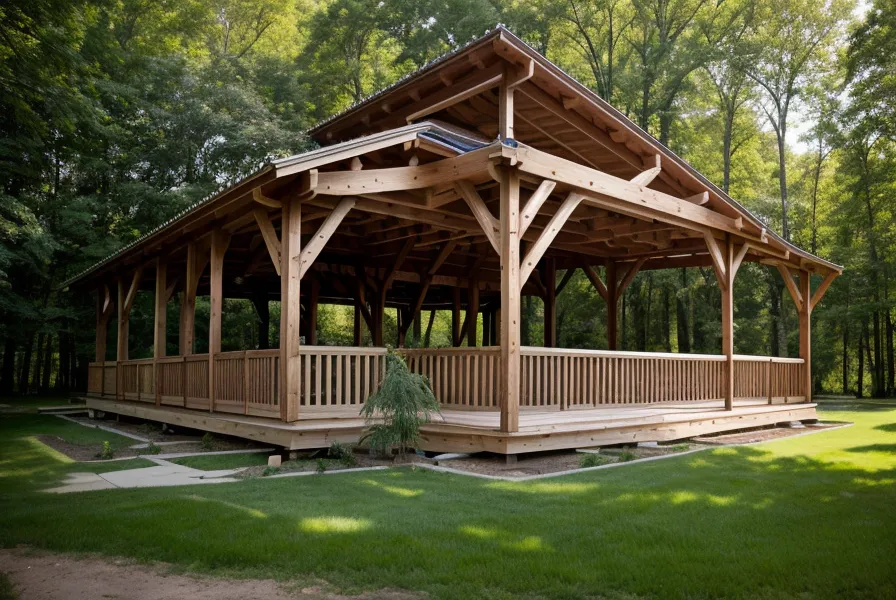
Money gets weird once you start comparing DIY to hiring out. When we priced our pergola, the labor quote came back around three thousand dollars, and I figured materials would run me roughly half that. Then I actually looked at what the job required — a real miter saw, a post-hole auger, clamps I didn't own — and the math got less flattering fast. One project rarely justifies buying an entire tool kit. It's the same logic as buying a stand mixer to bake a single batch of cookies: technically it works, but you'd have been smarter borrowing one. If you're only ever building one pergola, call the contractor and rent what you need for the day. But if you've got a half-acre and a list that includes a coop, a deck, and a workshop, those same tools stop being a cost and start being infrastructure — they pay for themselves by the third project, easily. That math is part of why we picked up My Shed Plans next: 12,000 designs focused specifically on outbuildings, with foundation guidance that helped us figure out which tools were actually worth owning instead of renting for a weekend. It's not the place to go if you want pergola or deck plans — that's not really its lane — but for outbuildings it delivers.
Framing and Lumber That Won't Sit Still
Humidity changes everything about framing in North Carolina. On the chicken coop build, she was checking levels while I fought the joists, and neither of us fully appreciated how much wood moves once summer humidity sets in — get your spacing wrong and a floor that felt solid in April feels like a trampoline by July. Stud framing has its own logic once you've done it a couple of times, but fastener choice matters just as much as layout. Early on I used plain drywall screws on an outdoor trim piece because that's what was sitting in the bin, and by the following winter every one of them had rusted through, bleeding orange stains down boards we'd just finished. Pressure-treated lumber needs hardware rated for ground contact, not whatever's closest on the shelf, and that mistake taught us to check fastener ratings before we check anything else now. Untreated lumber has its place indoors, but outside it's borrowed time. One thing I do notice, build after build: the scrap pile by the workshop keeps getting smaller, because we're finally cutting to a plan instead of a guess, and that tells you more about actual progress than any single measurement does.
Some Structures Need More Than a Level and a Prayer
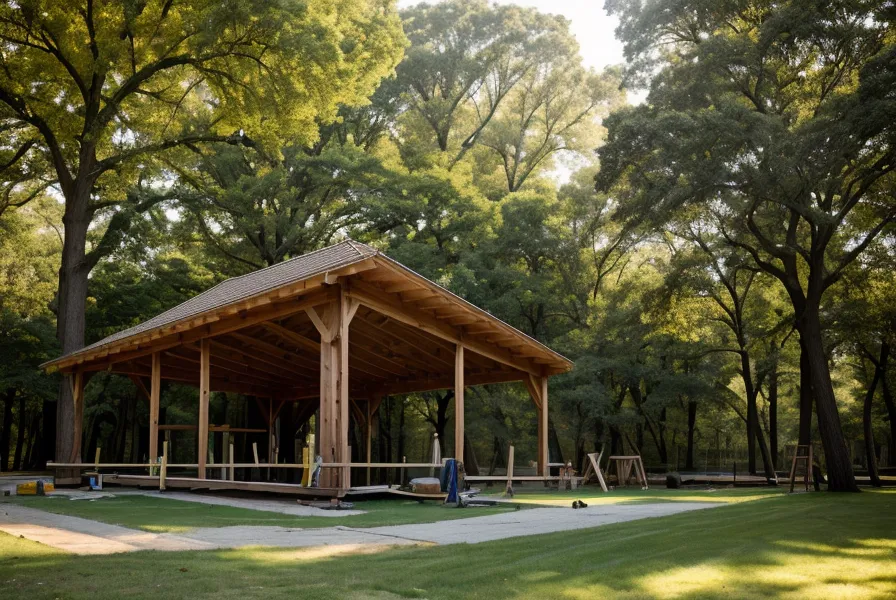
Certain builds forgive mistakes. Others don't. A pergola lives or dies on post spacing and beam span — get that wrong and it racks sideways in the first strong wind, which is exactly why our neighbor Ruben knocked on our door the Saturday after ours went up, asking how we'd chosen ours. Ruben's a good example of what happens without a plan, honestly — his builds always start on time and somehow finish two seasons late. A fence gate needs diagonal bracing or it sags within a year, no matter how solid the posts are. A shed roof needs enough pitch to shed water instead of pooling it, and if the ground underneath slopes the wrong way, you're fighting drainage problems for the life of the structure, not just during the build. The chicken coop taught us about predator-proof hardware we'd never have thought to buy on our own — hinges and latches strong enough that a determined raccoon can't just lift the door off. We used Self Sufficient Backyard to think through a water collection system off the coop roof, then leaned on some of the same thinking later when building a DIY chicken tractor for the younger birds — different structure, same questions about drainage and hardware. It's more of a project guide than a blueprint library, so don't expect precise cut lists there, but the ideas translate well. We also looked at solar for the coop at one point, and sizing an off-grid system correctly mattered more than which panel we bought. Whether a deck stands freestanding or ties into the house framing isn't just an aesthetic call either — it changes the whole footing plan underneath it. When we started framing interior storage for the workshop, we used a heavy duty workbench plan as a starting point, then adjusted it once we knew the shell was staying square.
How Do the Plan Libraries Compare?
If you're trying to decide whether to grab the hammer or the phone, the plans you're working from make a bigger difference than most people expect. Here's how the three resources we've actually used stack up for a regular homeowner trying to save money without losing a weekend to confusion.
| Product | Best For | Rating | Link |
|---|---|---|---|
| TedsWoodworking | Total Variety (16,000 plans) | 9.2 [Top Pick] | View Plans |
| My Shed Plans | Outbuildings & Foundation Specs | 8.8 | View Sheds |
| Self Sufficient Backyard | Homesteading & Productive Yards | 8.5 | View Guide |
Know Your Limits, and Your Lumber
Looking across our half-acre now, it's an honest mix of our own work and professional expertise, and we're not precious about which is which. The deck is entirely ours, built with ground-contact hardware so it won't rot in NC clay. The workshop framing is ours too, but the foundation underneath it is professional work, stamped and inspected. The real skill isn't doing everything yourself — it's recognizing which projects just need a solid set of plans and which ones need a license and a permit number. Standing where we were, staring at a quote that makes your eyes water, don't assume the only options are paying full price or winging it badly. Grab plans that actually match your project, buy the tools you'll reuse, and accept that the first build will probably take three weekends instead of one. Sitting on a deck we built ourselves, with joists spaced correctly enough that nobody notices, is worth every bit of the learning curve it took to get there.
If you're weighing the same decision we were, start with whichever plan library matches your actual project instead of buying the biggest bundle out of anxiety — TedsWoodworking if you want range, My Shed Plans if outbuildings are your whole list, Self Sufficient Backyard if you're thinking beyond structures toward a working yard. Check the comparison below, then go measure your own half-acre before you call anyone.
| Product | Rating | |
|---|---|---|
| TedsWoodworking Top Pick | 9.2 | Read More → |
| My Shed Plans | 8.8 | Read More → |
| Self Sufficient Backyard | 8.5 | Read More → |
TedsWoodworking
Pros
- ✓ Massive library of 16,000+ plans for every possible backyard project
- ✓ Detailed cut lists save a fortune in wasted lumber and gas
- ✓ Clear enough for beginners but detailed enough for complex builds
- ✓ Covers everything from small birdhouses to full-size decks
Cons
- ✗ The member area can be overwhelming to navigate at first
- ✗ A few older plans need a bit more modern detail