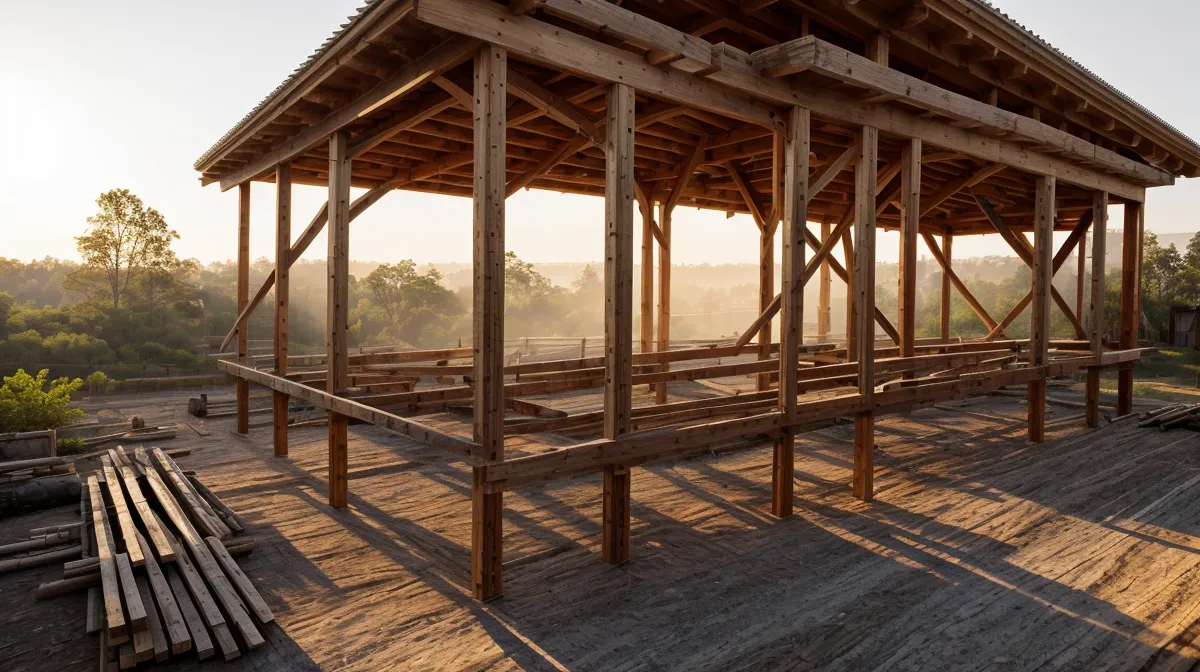
Store-bought plastic hoops lasted exactly one thunderstorm; a frame built from real lumber and cut to an actual plan hasn't budged since, and that gap between the two is the entire case for building raised bed covers instead of buying the flimsy kind off a shelf.
Quick disclosure before the how-to part: a few of the links below are affiliate links, meaning we earn a small commission if you buy through them, at no extra cost to you. We only link to plans and materials we actually used on this build, because our red clay half-acre punishes anything that isn't built right the first time.
Deer treat the kale out here like a buffet line, and the sun gets close to cooking peppers on the vine by mid-summer. Wind funnels across our lot on breezier afternoons, exactly the kind of gust that turns a lightweight PVC hoop cover into a kite. None of that is a reason to give up on raised beds. It's a reason to build the cover instead of buying one.
A Garden Bed Cover Needs to Be Structural, Not Just Decorative
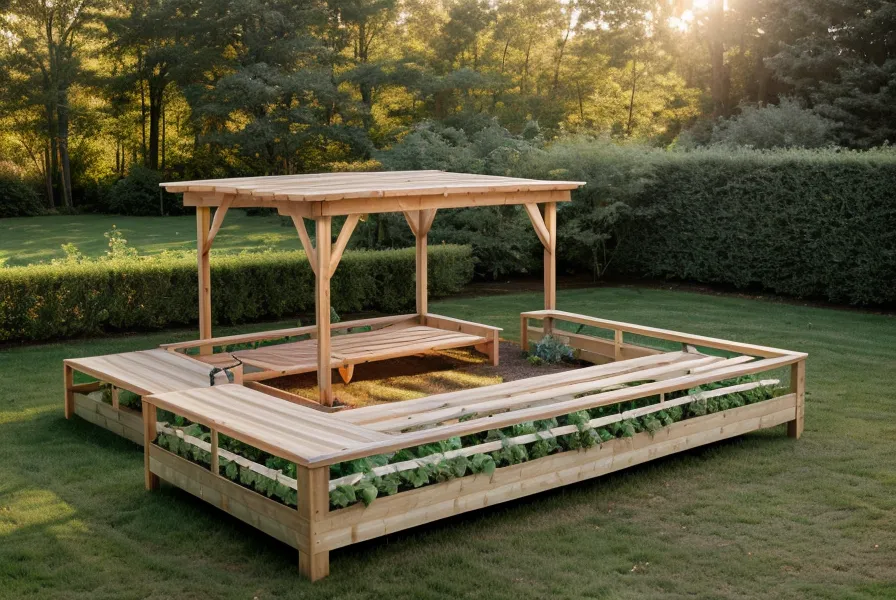
A structural cover needs four things to hold up: a frame square enough to keep its shape under load, joints strong enough to survive wind instead of just rain, a mesh size small enough to stop whatever's actually eating the garden, and an anchor point that keeps the whole assembly from turning into a sail. Skip any one of those and you're back to re-stapling loose netting after the first real storm. Ever watched a plastic hoop cover turn into a kite mid-thunderstorm? We have. The lumber list here is short — this isn't a pergola — but the tolerances matter more than the part count.
Squaring the Frame Before Anything Gets Cut
We built our first frame two inches too narrow because we measured the inside edge of the bed instead of the outside edge, which sounds minor until you're standing between a finished frame and a bed it won't sit on. We'd made almost the same kind of call on the deck the year before — eyeballed the frame measurements instead of checking them against anything, and ended up three inches out of square across a twelve-foot span before we caught it.
Working from an actual cut list instead of guessing — the same reason a recipe beats tossing in spices by feel — is the case for a real set of 16,000+ plans instead of sketching dimensions on the back of a receipt. It's also where checking for square, level, and plumb before a single fastener goes in earns its reputation as the most skipped step in backyard building. When the level went across the top rail of the second frame and the bubble floated dead center with nothing shimmed underneath, that told us the footprint was actually square before we'd committed a single screw.
Shane, who's worked the counter at the county lumber yard long enough to recognize our truck by now, looked at the cut list for this one and asked, not entirely joking, whether we thought we'd finish it in a weekend. We didn't, and he wasn't wrong to ask.
The Mesh Size and Shade Percentage That Actually Work in Raised Bed Covers
Anyone who's dug into North Carolina Piedmont soil knows the red clay is basically pottery waiting to happen. It drains badly enough that raised beds are close to mandatory, but it also means shimming and re-leveling the base frame more than once before it sits flush. We used hardware cloth with a 1/4 inch mesh on the lower sections, because anything bigger is an open door for squirrels and the bigger insects around here — the same logic that decides how tight the wire needs to be on a predator-proof coop run. For the top, we went with 40% shade cloth, which blocks enough sun to stop the peppers from scalding without starving the plants of the light they need to actually set fruit.
We used pressure-treated lumber for anything touching the clay and left the upper frame untreated, since that part never sits in wet soil and doesn't need the extra chemical protection. Cut lists that account for actual board dimensions instead of the nominal size stamped on the label make a real difference here — designing around the number on the tag instead of the real width leaves gaps in places you didn't plan for. Wood moves with humidity more than people expect, too. We left a cut piece outside overnight once, and by morning it had swollen just enough that it no longer fit the gap it was cut for. A diagonal brace across the back corner is what actually stops a tall frame from racking sideways in wind, more than the fasteners at the joints do.
We'd already been circling other yard projects while we worked on this one; the rainwater setup and a couple of others made it into Best Backyard Builds We Actually Finished. Once you build one structure that actually holds up, you start eyeing every corner of the yard for what else needs one.
Does Red Clay Change How You Anchor These Frames?
Anchoring matters more than people assume on a lot where wind funnels through at odd angles. We drove stakes at every corner and at mid-span instead of just the corners, because a twelve-foot run of frame without a middle anchor point is exactly where a gust finds the leverage to lift it. Grading and drainage around the bed change how deep those stakes need to go — clay that stays soggy after rain holds an anchor differently than clay that's had a chance to shed water away from the bed. None of this needed real footings the way a deck or a shed would; a garden cover is light enough that a well-set stake does the job a poured footing does on something load-bearing.
It also stayed well under any threshold that would have required a permit, which is one advantage of building something this size instead of jumping straight into a structure the county wants paperwork for. Post spacing on the frame followed the same rule you'd use sizing a beam span on anything bigger — closer spacing under more wind load, wider spacing where the structure is sheltered. We got the whole thing done with a drill, a miter saw, a level, and a staple gun, which is a shorter tool list than most backyard builds actually need.
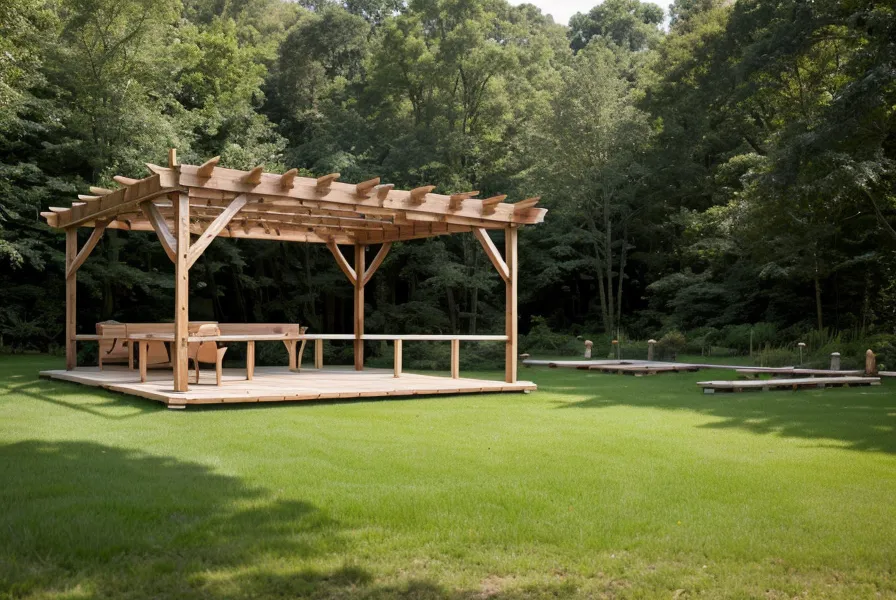
Around the same time, she started eyeing the space near the back porch for something bigger. If you want to see where that went, we wrote up Building a DIY Gazebo After Months of Planning Our Backyard Retreat. The same rule applied there — a real plan beats guessing.
The Difference Showed Up During a Summer Storm
The real test came during a summer storm that turned the sky that bruised-purple color right before the hail started. The covers held. Not mostly — ALL of it, through hail and the heat wave that followed. The anchoring kept the frames pinned down while the neighbors' squash got shredded and their tomatoes shriveled in the heat afterward, and the air inside our covered beds stayed close to ten degrees cooler than outside them. Angling the top rail slightly instead of building it dead flat is what actually shed water during that storm instead of pooling it against the shade cloth — the same principle that decides the pitch on anything with a roof, just scaled down to garden-bed size.
By the time the tomatoes came in, we had more than two people could reasonably eat. Most of the overflow went out the door at the Pittsboro Farmers Market in Chatham County to anyone willing to take a grocery bag off our hands. Jonas, who found our posts in a county DIY Facebook group after an earlier project and has been genuinely enthusiastic about pretty much everything we've built since, messaged asking for the cut list before we'd even finished writing this up.
After five years of building most of what's back here ourselves, the covers ended up being one of the more useful projects — not the flashiest, but the one that actually protects the food we're growing. If you want the cut list and measurements we used, TedsWoodworking is where we found it, inside a library with plans for pretty much anything else you'd want to add to a yard like this. If a plan library that size feels like more than you need right now, My Shed Plans sticks closer to storage and utility builds — about 12,000 designs focused on sheds — which is a reasonable place to start if the goal is just keeping tools dry before tackling a garden structure. And if you're building toward the fuller homestead picture, coops and water collection and food production, Self Sufficient Backyard covers that ground specifically.
None of this fixes a bad growing season by itself. But losing a harvest to a collapsed cover is a fixable problem, and it's usually cheaper to fix with real lumber and an actual plan than by replacing a flimsy cover every year. Start with the TedsWoodworking project gallery if you want to find a frame sized for your own beds.