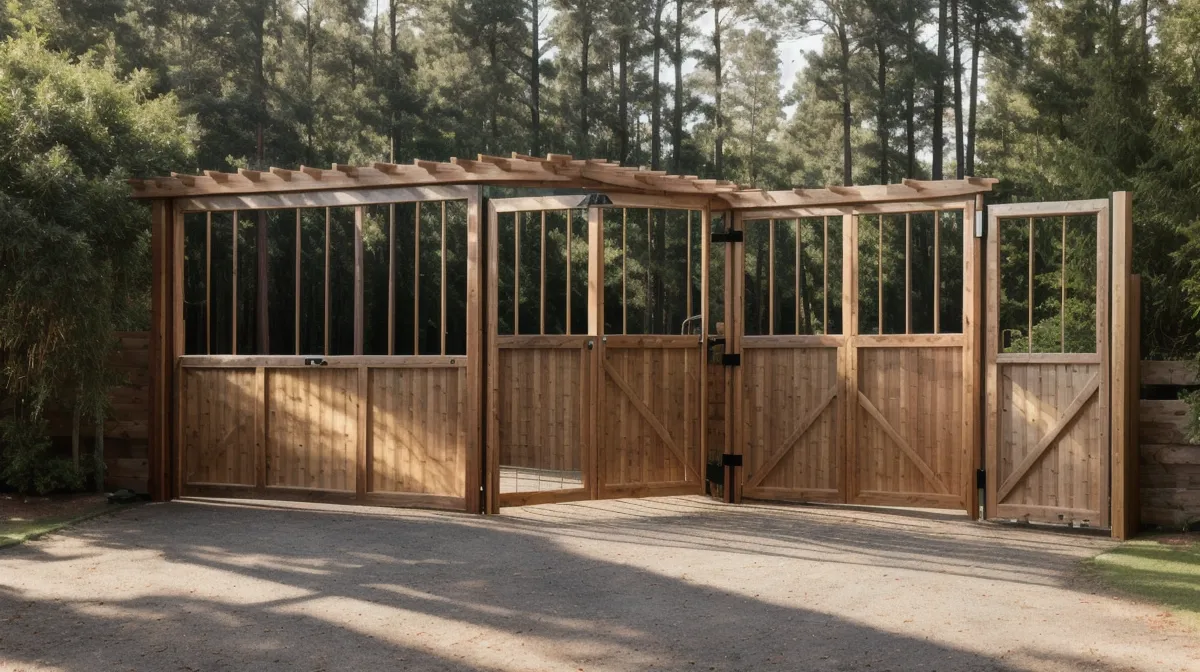
A gate that won't latch and a fence post leaning half an inch off plumb look like two different problems; they're actually the same one wearing two different faces. That's the thing nobody mentions about backyard fence repair: the fix almost never lives in the gate itself. It's a foundation problem dressed up as a hardware problem, and we spent the better part of a year treating ours as the latter before we figured that out. What started as a quick outdoor project turned into a running joke about who'd hip-check the gate open next, and eventually into one of the more useful lessons in DIY woodworking and backyard maintenance we've picked up out here.
The Fence Repair Myth Everyone Believes
Here's the myth: if a gate sags, you fix the gate. You add a brace, a turnbuckle, a chunkier hinge — something that makes the gate itself stiffer. We built ours the same way we built our DIY picnic table a season earlier, treating it like a smaller fence section that happened to swing. Standard 42 inches wide, which is the standard width for a residential walk gate, framed square, hung on decent hinges. On paper it should have held forever.
Gravity had other ideas. Every rectangle wants to collapse into a parallelogram the instant something in the frame gives — the same racking you'd fight in stud wall framing if nobody bothered bracing the corners. Without a diagonal brace of its own, the only thing keeping our gate square was the friction of a handful of screws.
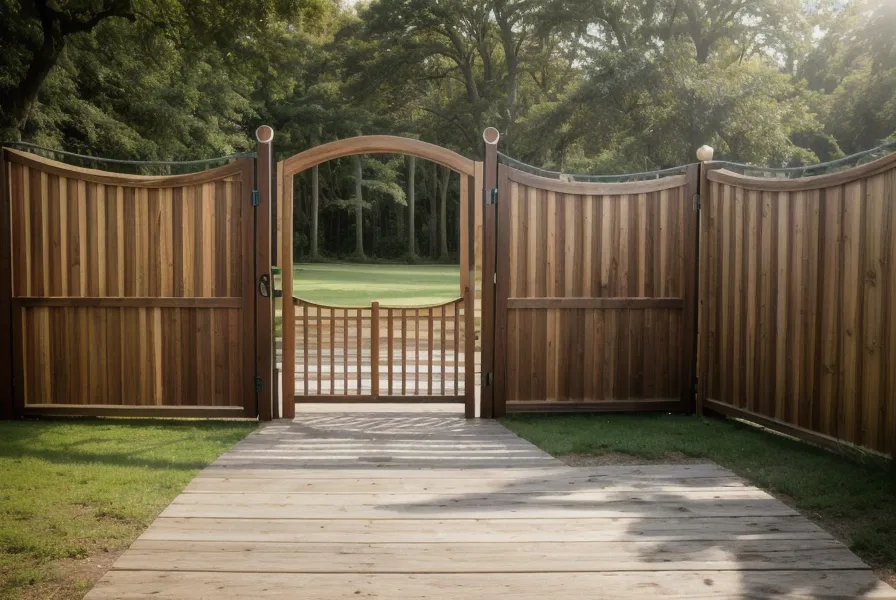
The boards were still wet when we hung that gate. Pressure-treated wood can carry up to 75% more water weight fresh off the rack than it does once it's cured outside, unlike a kiln-dried or untreated board that arrives close to its final weight. As ours dried, it shrank a little. The screws loosened a hair. Gravity did the rest.
Why Does Tightening the Hinges Never Actually Fix It?
So we did what most people do. We bought a turnbuckle anti-sag kit — a cable and tensioner you run diagonally across the gate to pull the latch side back up toward the hinge, pure Rule of Triangles thinking. Cranking it tight one Saturday felt like real progress. For a while, it was. Then the sag crept back in, because the weight of the gate was never just pulling on the frame — it was pulling on the entire hinge post, and no amount of cable tension changes that.
A neighbor of ours spends most weekends restoring vintage motorcycles in a cinderblock garage down the road, and when we described the problem over the fence line, he didn't even pause. "That's just leverage," he said — the gate is a long lever arm, the hinge post is the pivot, and every added brace or cable just piles more load onto that same pivot point. It's a lot like carrying a balance on a credit card and only ever paying the minimum: you're servicing the symptom every month while the actual problem keeps compounding underneath it. Add hardware, add leverage, and the post leans a little further every time.
Fix the Post, Not the Gate
If you want a sag fixed for good, stop working on the gate leaf and start working on what it's hanging from. Most people assume their fence posts are perfectly vertical, anchored in a block of concrete that isn't going anywhere. In Piedmont clay, that's rarely true. If a hinge post leans even a fraction of an inch, that error multiplies by the time it reaches the latch, 42 inches away. That's how a barely-visible lean turns into a gate you have to lift with your knee.
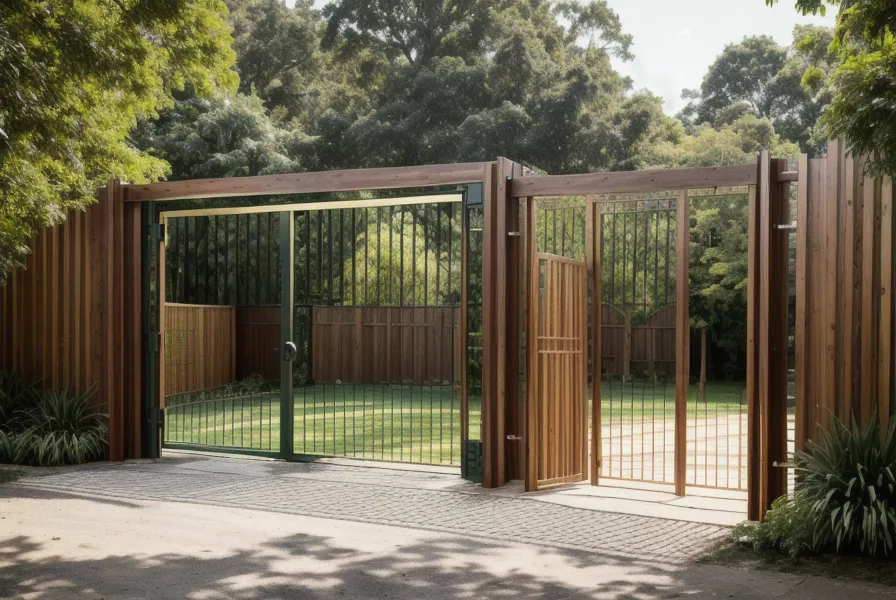
We pulled the gate off its hinges entirely and leaned it against the fence. A four-foot level rode along for this part, because plumb is the whole ballgame with a hinge post — you can't eyeball a fraction of an inch. We dug in just enough around the base, nowhere near the original 24 inches of depth the post was set at, and worked a pry bar against it until the post nudged back past plumb, leaning slightly away from the gate opening on purpose.
Our first instinct was to just glue a brace across that hinge post and the adjacent rail with construction adhesive, figuring it would cure overnight and save us a step. Why did we think glue would out-muscle something that swings every single day? No idea. It did NOT. The first time the gate swung shut under any real load, the joint let go clean, adhesive and all — glue holds still things together, and does nothing for something that moves.
So we went back to basics: a long structural screw driven through the hinge post into the adjacent fence rail, using the rest of the fence line as a giant brace to hold that post steady. We picked up the right structural screws at Lowe's Home Improvement in Sanford after the hardware bin at home turned up nothing but deck screws, which won't bite deep enough for this kind of load.
These days we sketch out anything structural before we touch a drill, instead of improvising the way we used to — a habit this repair reinforced, even though a gate fix is small enough that it never trips any permit thresholds the way a deck or a taller structure would. No inspector cares if you shift a fence post two degrees.
Nominal Sizes, Real Weight
Here's a detail that trips up a lot of people doing this kind of repair: a 4x4 post is not actually 4 inches by 4 inches. Once it's milled and dried, the nominal size works out to a real 3.5 inches by 3.5 inches, and that's the actual mass you're leveraging against when you're trying to shift a post. The margin for error is smaller than the label on the lumber suggests.
The whole fix ran on a cordless drill, a pry bar, and that four-foot level — nothing exotic, nothing you'd need a dedicated shop for. Wood keeps moving after it's installed, wet season to dry season, which is part of why we leave a deliberate gap now on anything we build outdoors instead of fitting boards tight edge to edge. Tight joints are exactly what buckle once the humidity swings. We ran into a smaller version of the same lesson hardening the chicken coop against predators: hardware is only as good as what it's anchored to, and if the anchor point moves, the hardware stops mattering.
It's the same geometry lesson that showed up when we were building a lean-to shed for lawn mower storage — get the pitch and the angles right from the start and water sheds the way it's supposed to; get the angle wrong, even slightly, and you're patching the same symptom forever instead of fixing the geometry underneath it.
We also swapped the original hinge screws for 3-inch structural lags that bite deep into that 3.5-inch post instead of the shorter screws that had worked loose. If you're already in there fixing it, fix it once.
The Sound That Told Us We Were Right
The gate hasn't budged since, through more than one heavy summer storm — the exact conditions that used to make the dragging worse, extra humidity and swollen wood and the whole routine. Fixing the post alignment instead of just masking the sag with a cable meant the geometry stayed true even when the wood swelled. No more knee-hoisting, no more red clay under the fingernails from wrestling a latch that wouldn't clear the strike plate.
Our workshop door out back had the exact same problem for what felt like forever — catching on its frame, needing a shoulder-check to close. Once we applied the same fix to the post it hangs from, it swings open now without a single wobble or squeak. That's when it really sank in that we'd fixed an actual cause instead of another symptom.
It reminded us of creating a DIY solar food dehydrator a while back, when we kept adding fans to fix airflow that was never really the problem. Sometimes the fix isn't more hardware. It's a smaller adjustment further upstream.
So if your gate is dragging and you're eyeing a heavier brace or another turnbuckle, put the extra hardware down for a minute. Grab a level, check the hinge post for plumb before you check anything else, and watch how the lean travels down the fence line. Nine times out of ten, the gate was never the problem; it was just the part making the most noise about it.